
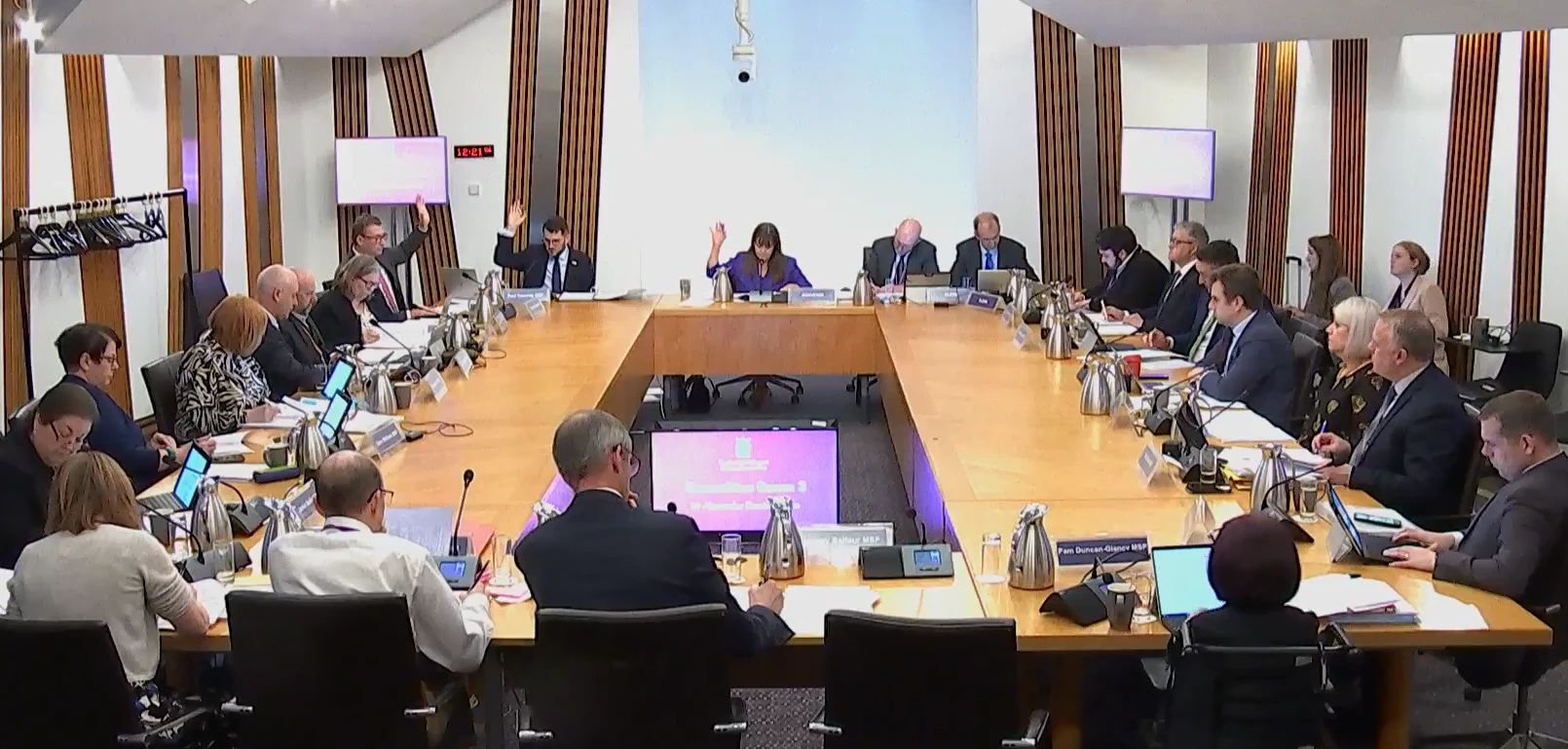
Heavy criticisms of the assisted suicide Bill going through the Scottish Parliament have been made by MSPs scrutinising the proposed law.
Worried politicians have now instructed the health committee to write to the United Nations Committee on the Rights of Persons with Disabilities (CRPD) to ask if the planned legislation is compatible with UN human rights standards or breaches the rights of individuals.
The CRPD Committee has recently launched an investigation into a similar assisted suicide/dying bill in France and has written to the French Government raising concerns and asking the French Government to respond. Canadian assisted dying legislation has also been heavily criticised by the UN Committee for putting the lives of disabled people at risk without adequate protections being in place.
With regard to the bill before Holyrood similar concerns exist, especially because of the broad definition of terminal illness contained in Liam McArthur’s assisted dying bill. Unlike the bill being considered at Westminster, no prognosis of life expectancy is contained in Liam McArthur’s bill.
Last week Holyrood’s health committee rejected an amendment which would have inserted into the bill a requirement that people have only 6 months left to live before being given assistance to die by suicide.
The safeguard was opposed by Mr McArthur but was accepted by the health committee.
Serious questions have also been raised about what would happen if – as has been reported in the USA – some people in the assisted suicide process are left languishing in pain for hours or even days after taking prescribed lethal drugs. In Oregon in the USA it has taken patients up to 5 and half days (137 hours) to die after ingesting lethal drugs under its assisted dying regime.
A number of MSPs raised matters which have been made to them by members of medical bodies and professional medical practitioners.
Emphasising the significance of the Bill, MSP Brian Whittle said: “We have to take their views into consideration. This is not like any other Bill. It’s not like anything we have been asked to do before.”
Dr Gordon Macdonald, CEO of Care Not Killing, said:
“Yet again we see Liam mcArthur and Holyrood’s health committee rejecting very reasonable proposals to improve the safeguarding in the bill. Assisted suicide is inherently dangerous, but there is no need for Scotland to have the most permissive and unsafe legislation in the world.”
“At present, Liam McArthur’s bill poses a very real threat to those who are disabled, depressed or have life-shortening conditions but years or even decades of life to live. I welcome the fact that a majority of MSPs on the health committee agreed to write to the UN Committee to get its views on the BIll, but I am astonished that some of the MSPs and Liam McArthur opposed even this sensible and modest move.”
Dr Macdonald added:
“It is of great importance that MSPs are paying so much attention to the issues before them as we have been concerned that the way the Bill is being pushed through Holyrood has caused us deep alarm.
“Westminster gave its own Bill three full months of scrutiny. The Westminster committee spent 66 hours dealing with scrutiny and the House of Lords is adding to that – Holyrood’s committee has so far spent little more than 10 hours.
“We are talking about a law that will put vulnerable people at real risk
“When the stakes are life and death, thorough scrutiny isn’t optional, it’s essential. Rushing scrutiny of this Bill to meet a political timetable is not just bad practice, it’s dangerous.”
Dr Macdonald also highlighted a number of other issues raised at the committee including:
-
The rejection of MSP Sue Webber’s amendment which would have informed people seeking an assisted suicide about the potential side-effects of taking the substance, including vomiting, choking and drowning in lungs.
-
The rejection of MSP Pam Duncan Glancy’s amendment which would have required doctors to ask a patient why they wish to have an assisted suicide and to reject requests that are not made because of terminal illness.
-
Proposals by MSP Daniel Johnson who highlighted that the Bill is not clear that “the final act” of ending one’s life is actually done by the individual who wants to die. Such a foundational point remains unaddressed.
During the committee meeting the sponsor of the Bill, MSP Liam McArthur, dismissed the Royal College of Nursing’s recommendations for the assisted suicide Bill as “disproportionate”.